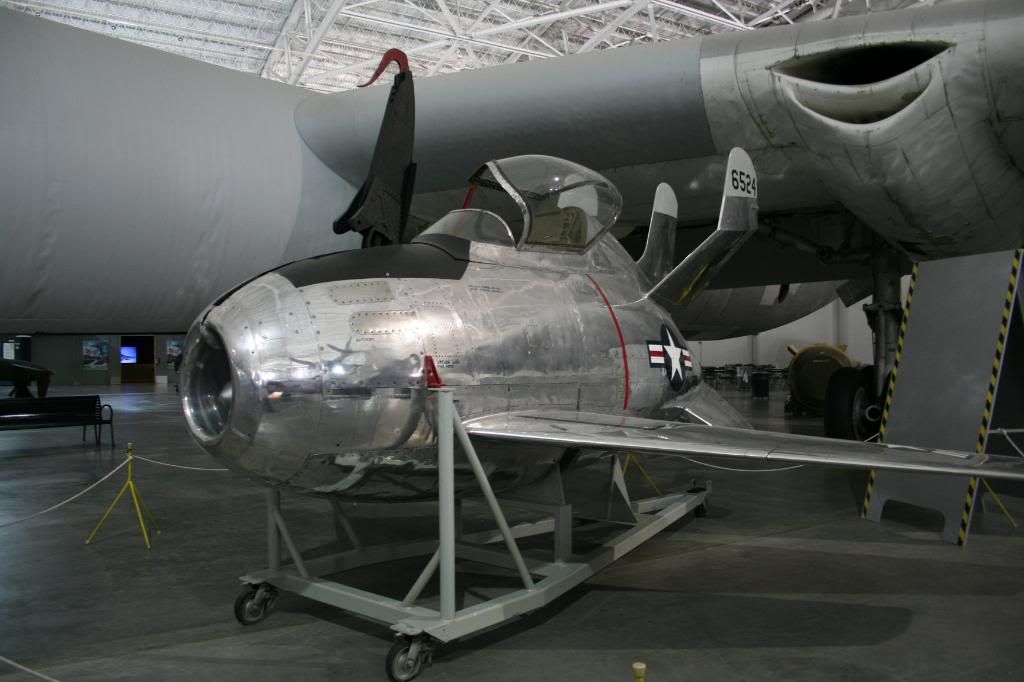
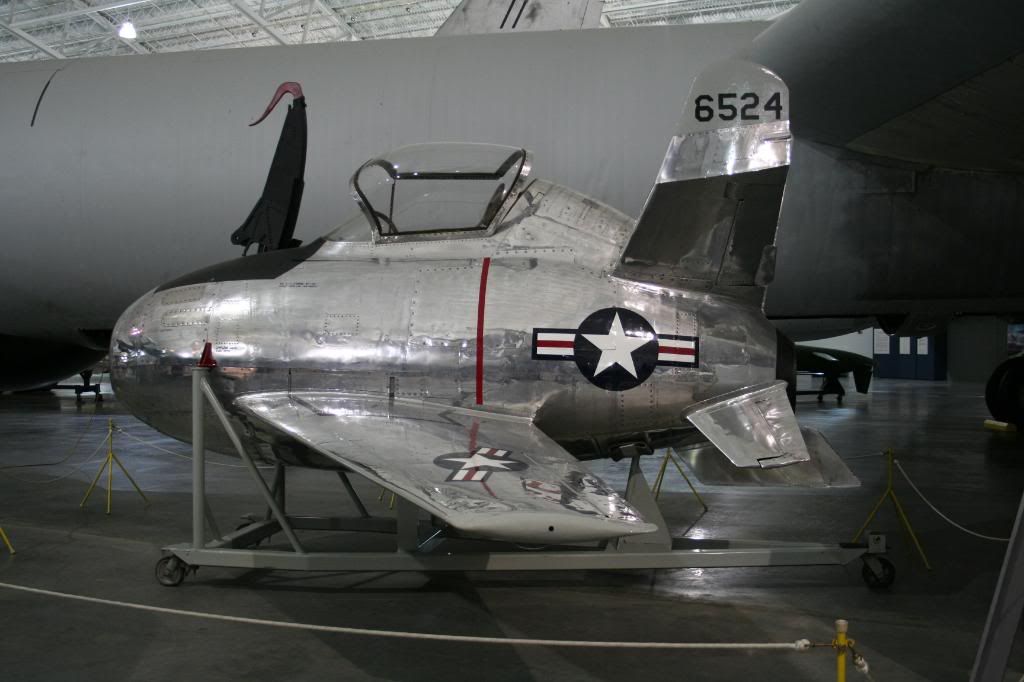
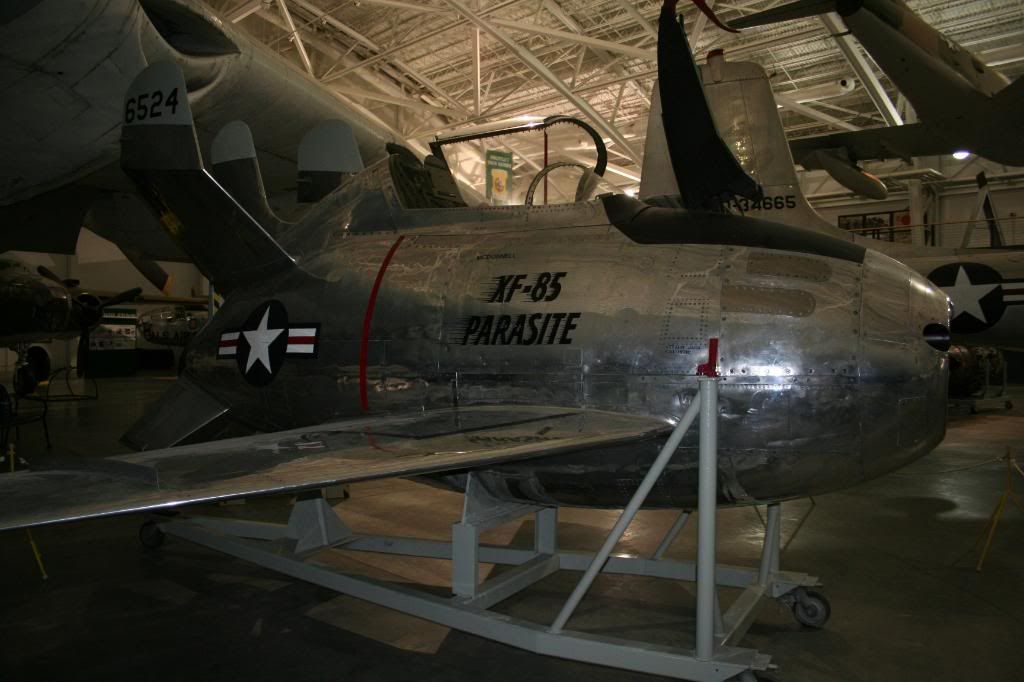
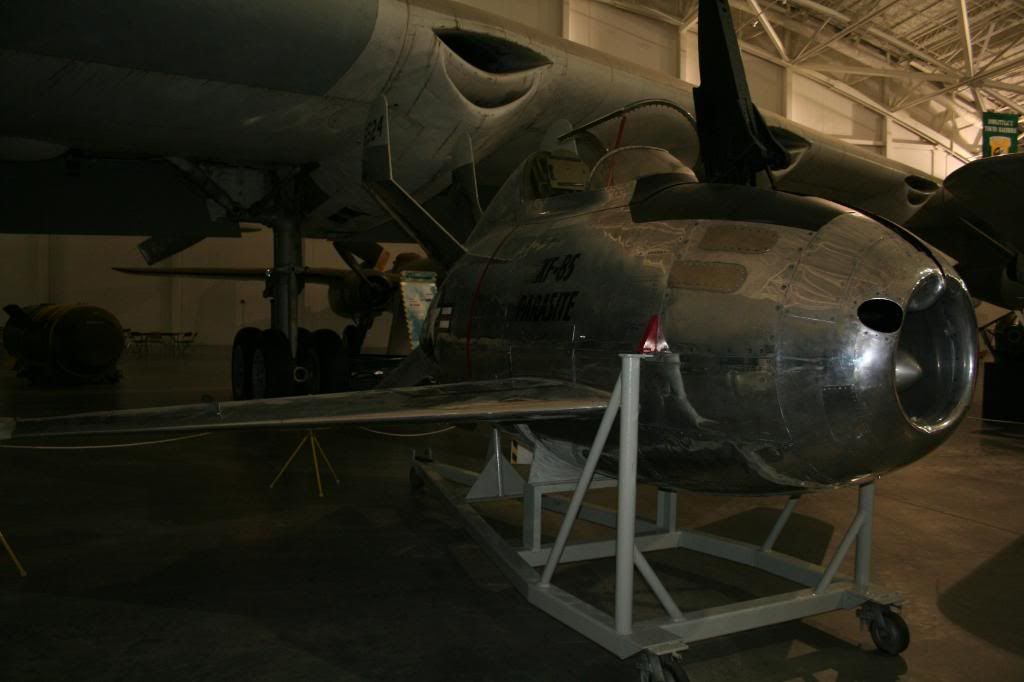
F-85(XF), S/N 46-0524 at Strategic Air and Space museum
Mon Jan 14, 2008 12:16 pm
One of only two. The other is at the National Air Force Museum.
http://www.strategicairandspace.com/col ... /F-85.html
Funny little bugger.
Eric
http://www.strategicairandspace.com/col ... /F-85.html
Funny little bugger.
Eric
Mon Jan 14, 2008 3:57 pm
Sorta looks like a chrome-plated potato with wings and a tail, kinda like an aviation "Mr. Potato Head" toy. 
Seriously, I've read that the Goblin was a real handful to fly and that test the flights seldom ended successfully (belly landings in the desert rather than trapeze hookups under the B-36). Can you imagine trying to fly that li'l bugger up underneath the mothership with all of that turbulence from those huge props tossing you around? Gee whiz!
Dean the utterly amazed
Seriously, I've read that the Goblin was a real handful to fly and that test the flights seldom ended successfully (belly landings in the desert rather than trapeze hookups under the B-36). Can you imagine trying to fly that li'l bugger up underneath the mothership with all of that turbulence from those huge props tossing you around? Gee whiz!
Dean the utterly amazed
Mon Jan 14, 2008 4:00 pm
At the risk of becoming a chronic youtube poster...
Thought this was amazing. How about that first effort at mating with the B-29? Ouch!
kevin
http://www.youtube.com/watch?v=PisUjsXSUZU
Thought this was amazing. How about that first effort at mating with the B-29? Ouch!
kevin
http://www.youtube.com/watch?v=PisUjsXSUZU
Mon Jan 14, 2008 6:30 pm
And how about the wingtip parasite?

TIP TOW F-84D TESTS
One of the more interesting experiments undertaken to extend the range of the early jets in order to give fighter protection to the piston engineed bombers, was the provision for in-flight attachment/detachment of fighter to bomber via wingtip connections. One of the several programs during these experiments was MX106 done with a B-29 mother ship and two F-84D "children", and was code named "Tip Tow." A number of flights were undertaken, with several successful cycles of attachment and detachment, using, first one, and then two F-84s. The pilots of the F-84s maintained manual control when attached, with roll axis maintained by elevator movement rather than aileron movement. Engines on the F-84s were shut down in order to save fuel during the "tow" by the mother ship, and in-flight engine restarts were successfully accomplished. The experiment ended in disaster during the first attempt to provide automatic flight control of the F-84s, when the electronics apparently malfunctioned. The left hand F-84-1-RE 48-641 rolled onto the wing of the B-29, and the connected aircraft both crashed with loss of all onboard personnel.
The pilot of the right-hand F-84D-1-RE 48-661 wrote of the Tip-Tow experiments in an article entitled Aircraft Wingtip Coupling Experiments published by the Society of Experimental Test Pilots.
The photo above was taken during the longest "hookup" on 20 October 1950.
Mon Jan 14, 2008 9:37 pm
looking back now, those sure seem like stupid ideas.
B
B
Mon Jan 14, 2008 11:16 pm
Another stupid idea was the tracked landing gear for unimproved air fields. It seems like the idea was tried on every bomber, yet none of them worked. You would think the engineers would have caught on after the first attempt.
Tue Jan 15, 2008 1:31 am
Hard to believe that little egg could get in the 600 mph range isn't it! The airplane at the SAC Museum flew six of the seven flights of the program, and I think it's the one that tagged the trapeze with the canopy in that video we've all seen. Oh, by the way, the XF-85 program never got to coupling with a B-36, the trials used a modified B-29 for the mother ship. The FICON program was really quite successful though, with the RF-84Fs hooking the RB-36 trapeze with relative ease. One of the B-36 books I have talks about the Operations personnel scratching their heads when the RF-84 pilot flight plans for a 20 hour unrefueled mission!!!
Scott
Scott
Tue Jan 15, 2008 2:20 am
A little known fact here is that one of the pilots of the wing tip and trapeez missions was none other than Bud Anderson.