Mon Mar 03, 2008 12:29 pm
I'll also reiterate that, IMHO, regardless of schemes, I still feel that the owner of a warbird is entitled to whatever scheme/colors/markings they choose, since it belongs to them, regrdless of accuracy.
k5083 wrote:As far as neat/sloppy, both the photographic record and common sense indicate that some D-day stripes were painted pretty neat, others very sloppy, and everything in between. Sloppy isn't automatically accurate.
Also, sloppy stripes on 6 July 44 didn't necessarily stay that way. No doubt many conscientious crew chiefs neatened things up when they got the chance after the invasion.
Theater markings applied at a more leisurely pace to ID aircraft throughout a whole campaign, like the Brits in Korea and the French (and Brits, too) in Suez, generally were pretty neat. Again, photos and intuition agree.
As for whether to put them on restored aircraft:
I'm of the school that votes for restoring every vintage aircraft in its own original markings, even if those would make it not "representative" or undistinguished. I'm in good company among those who like vintage aircraft (i.e. those who focus on civil aircraft or who don't distinguish between civil and military) but in the minority among specialist warbird enthusiasts who are more apt to feel that preserved airplanes are supposed to commemorate something.
I often hear the argument famvburg raises, that if there is only one flying, it should be in the most representative scheme, and the person stating this position invariably then puts forth a totally personal, subjective and debatable opinion as to what that most-representative scheme is, as famvburg has done. What often happens with warbirds is that every operator treats his warbird as if it were the only one flying and places it in what he considers the most-representative paint scheme, and to the extent that people agree on what that scheme is, we end up with a lot of warbirds wearing almost the same paint scheme (even if not accurate for the variant) and a lot of worthy paint schemes not represented.
So I would say, put the D-day stripes on if you think they look sharp, and if that is what you want to commemorate. I would prefer, however, that operators not add D-day stripes to paint schemes where they're innaccurate. For example, most 8th AF P-51 units had coloration on their noses which, prior to Jan. 45, were confined (with a few exceptions such as the bluenoses and the yellownoses) to a small area right behind the spinner. In around Jan. 1945, these markings were often extended back across most or all of the engine cowling. By that time, the D-day stripes were all gone. But Mustang owners like more color on the nose and they also like D-day stripes, so some inaccurately combine the markings. Current examples of this are the CAF's Red Nose, "Sizzlin Liz", and several others. So by all means put 'em on, but only if they belong! (I would think that accurate 8th AF markings would be gaudy enough for anybody...)
August
Mon Mar 03, 2008 12:39 pm
If I had an aircraft that "could" have had invasion stripes, then there's a 90% chance that's how I would paint it, with the exception of the MAAM P-61. Of course If I could come up with a 5th P-61, then yes, it would probably have them too! 

 I'm a sucker for them. I can't help it.
I'm a sucker for them. I can't help it.
Mon Mar 03, 2008 1:42 pm
South Africa may in fact be a much worse place to exist if born a girl, but it is India that seems to be much more known for this horrible injustice. Regardless, there is no reason for why barbaric sense and ideals should exist. But to be a mother and to have to kill your own child is something I couldn’t even fathom. And yet this sad and awful ritual happens every day. To me the craziest thing is that these parents have no remorse for these lost girls. To be in a place to curse the female gender and praise the male, just seems wrong.
Its ok, once the POF obtains the Beijing P-61, I’m sure they'll give a good ole' authentic coat of OD and gray! Well, you know once hell freezes over and they actually get to restore it, and you know maybe after a few years of flying her in an authentic Pacific scheme, then yea! We might get to see a D-Day P-61 fly one day! 
Here’s to hoping!
Its ok, once the POF obtains the Beijing P-61, I’m sure they'll give a good ole' authentic coat of OD and gray!
Well, you know once hell freezes over and they actually get to restore it, and you know maybe after a few years of flying her in an authentic Pacific scheme, then yea! We might get to see a D-Day P-61 fly one day!
Here’s to hoping!
Last edited by Warbird Kid on Tue Mar 04, 2008 5:38 pm, edited 1 time in total.
Tue Mar 04, 2008 5:29 pm
Whoa, hello left field!
This rules.
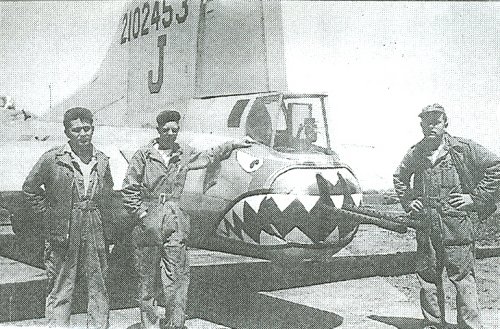
This rules.
Tue Mar 04, 2008 5:37 pm
WOW
Sorry for that posting. I have no idea how that happened! That was not meant to be posted. That is in fact my "Global Issues" message board posting for my class in college right now. I guess i wasnt trying too hard to pay attention to my homework and instead waste my time all-day here on the WIX boards.
Man cant believe that happened!
And now for something completely different!
PS. but the bottom part of my post was meant for WIX.
Sorry for that posting. I have no idea how that happened!
That was not meant to be posted. That is in fact my "Global Issues" message board posting for my class in college right now. I guess i wasnt trying too hard to pay attention to my homework and instead waste my time all-day here on the WIX boards.
Man cant believe that happened!
And now for something completely different!
PS. but the bottom part of my post was meant for WIX.