Sat Jun 27, 2009 7:24 pm
Many years ago when I visited the Ho.229 at Garber, the NASM Curator who was showing me around pointed out to me that the landing gear in the artifact as it is presently includes a structural member that simply should not be there if the landing gear was to retract successfully. Maybe some of the Garber photos will show this. He asked me what I thought and we pondered on it for a while and had the best guess that the gear presdently on the airplane is not what was intended for flight, or at least for flight with gear retracted.
When NASM does do the restoration, they will find a complicated situation with many curatorial decisions needed, final markings being just one of the questions. The airplane was found disassembled, with the wings located at a different airbase than the fuselage. There was some assembly of parts about the factory, perhaps hasty, perhaps appropriate to the aircraft and perhaps not. The wings may or may not belong to this fuselage, and may or may not be comparible to the fuselage. (As far as I know, these wings have never been attached to this fuselage.)
There will also be questions about what to do with the wood materials: conservation/preservation versus replacement. One of the photos included in the National Geographic webpage shows a section of the plywood in poor condition, though other photos show the wood at least intact, and hopefully still structually sound.
My assumption is that the fuselage includes the original engines. I have already raised the question about how the engines might be removed. It did not look to me like there is any kind of panels or other obvious access to the engines, except perhaps by taking off the wings.
It may well be that this aircraft was more a proof-of-concept vehicle than intended to be a real prototype of an airplane intended for operational combat. The plane may not have been intended to last more than the few hours of flight time before the engines would need to be overhauled. It sounds strange, I know, but these were tough times and the Hortons were trying very hard to get this thing in the air before the war ended, if for no other reason than to prove the validity of their concepts. This means that they may have cut a lot of corners. Actually, I think the high priority originally given by Goering had been reduced in the late-war, so all the more reason to do whatever it took to get it airborne.
Remember that the previous prototype had experienced a fatal accident, and the gliders also had an uncertain record for stability, not much different from the experiences of the early Northrop wings. My guess is that the Hortons were really rushing this thing along before the funding was completely eliminated. So, when they get into the airplane during the restoration there might be a lot of evidence of hasty work and improvised decisions. The landing gear may not have been intended to be retracted for at least the early flights, with a different landing gear installed later on. This is all speculation on my part, judging from what little I have seen and know about the plane, but there you have it...
When NASM does do the restoration, they will find a complicated situation with many curatorial decisions needed, final markings being just one of the questions. The airplane was found disassembled, with the wings located at a different airbase than the fuselage. There was some assembly of parts about the factory, perhaps hasty, perhaps appropriate to the aircraft and perhaps not. The wings may or may not belong to this fuselage, and may or may not be comparible to the fuselage. (As far as I know, these wings have never been attached to this fuselage.)
There will also be questions about what to do with the wood materials: conservation/preservation versus replacement. One of the photos included in the National Geographic webpage shows a section of the plywood in poor condition, though other photos show the wood at least intact, and hopefully still structually sound.
My assumption is that the fuselage includes the original engines. I have already raised the question about how the engines might be removed. It did not look to me like there is any kind of panels or other obvious access to the engines, except perhaps by taking off the wings.
It may well be that this aircraft was more a proof-of-concept vehicle than intended to be a real prototype of an airplane intended for operational combat. The plane may not have been intended to last more than the few hours of flight time before the engines would need to be overhauled. It sounds strange, I know, but these were tough times and the Hortons were trying very hard to get this thing in the air before the war ended, if for no other reason than to prove the validity of their concepts. This means that they may have cut a lot of corners. Actually, I think the high priority originally given by Goering had been reduced in the late-war, so all the more reason to do whatever it took to get it airborne.
Remember that the previous prototype had experienced a fatal accident, and the gliders also had an uncertain record for stability, not much different from the experiences of the early Northrop wings. My guess is that the Hortons were really rushing this thing along before the funding was completely eliminated. So, when they get into the airplane during the restoration there might be a lot of evidence of hasty work and improvised decisions. The landing gear may not have been intended to be retracted for at least the early flights, with a different landing gear installed later on. This is all speculation on my part, judging from what little I have seen and know about the plane, but there you have it...
Sat Jun 27, 2009 11:20 pm
excellent speculation with alot of possibilities!! cool story & approach , but i don't understand why yet again the pentagon is blowing dust off old experiments from operation paperclip!! with all the computer technology today why go to a dusty archive!! even the b-2 is somewhat dated by now.
Sat Jun 27, 2009 11:48 pm
tom d. friedman wrote:excellent speculation with alot of possibilities!! cool story & approach , but i don't understand why yet again the pentagon is blowing dust off old experiments from operation paperclip!! with all the computer technology today why go to a dusty archive!! even the b-2 is somewhat dated by now.
Because Northrop engineers have always had an interest in the early tech and volunteers took the opportunity to build one when Nat Geographic was to do a film....a bit of fun and a learning excersice at the same time...nothing to do with current or future 'serious' s**t. Take it for what it is - curiosity about an aircraft that started the ball rolling.
Sun Jun 28, 2009 4:44 pm
Here is a link for many good photos of the Ho.229.
http://www.primeportal.net/hangar/howard_mason/go229/
http://www.primeportal.net/hangar/howard_mason/go229/
Sun Jun 28, 2009 5:41 pm
old iron wrote:Many years ago when I visited the Ho.229 at Garber, the NASM Curator who was showing me around pointed out to me that the landing gear in the artifact as it is presently includes a structural member that simply should not be there if the landing gear was to retract successfully. Maybe some of the Garber photos will show this. He asked me what I thought and we pondered on it for a while and had the best guess that the gear presdently on the airplane is not what was intended for flight, or at least for flight with gear retracted.
Any idea of whether the structural member was "original" to the aircraft, or was added later, possibly by the Americans? IIRC German tricycle-gear aircraft (specifically the Me-262) had issues with nose-gear collapses. The member could be there as a brace to make absolutely sure the gear didn't collapse while the aircraft sat on the ground.
Sun Jun 28, 2009 10:10 pm
Just watched the show.
They really played up the "stealth" aspect with the modern TV spin.
I found it interesting that the model they built had no control surfaces, which would've probably added some higher radar returns with the gaps at the hinges. I guess it simplified construction and helped prove their "TV Themed Theory".
Anybody know where the model is today?
Jerry
They really played up the "stealth" aspect with the modern TV spin.
I found it interesting that the model they built had no control surfaces, which would've probably added some higher radar returns with the gaps at the hinges. I guess it simplified construction and helped prove their "TV Themed Theory".
Anybody know where the model is today?
Jerry
Sun Jun 28, 2009 10:43 pm
San Diego Air Museum
Mon Jun 29, 2009 12:55 am
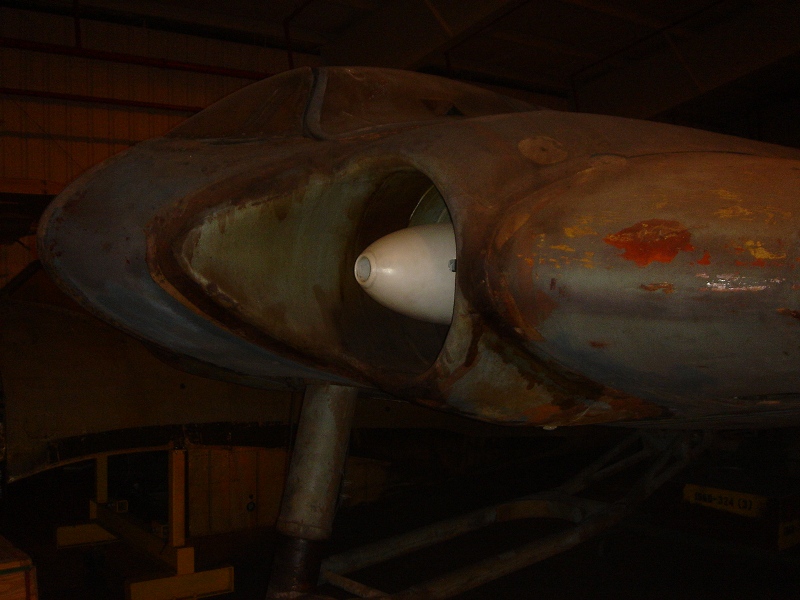
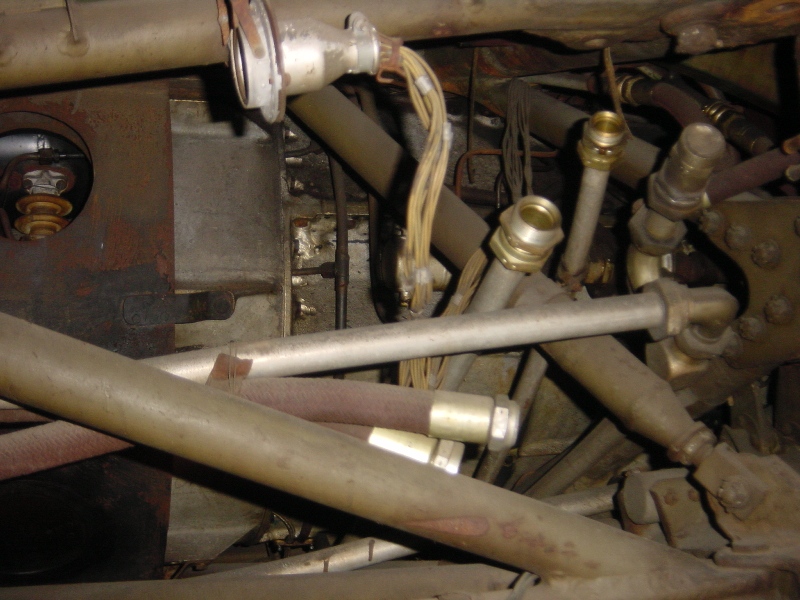
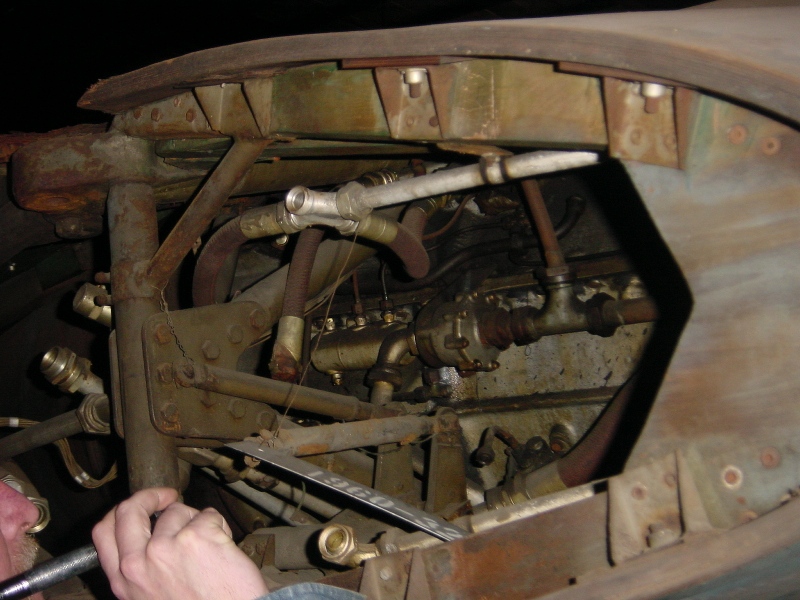
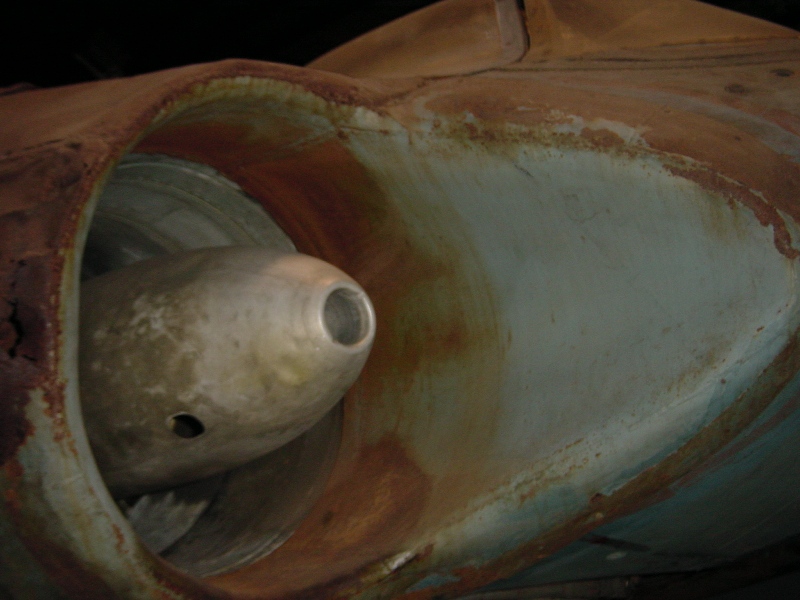
Here are some lousy shots I took in 2004 and 2005:
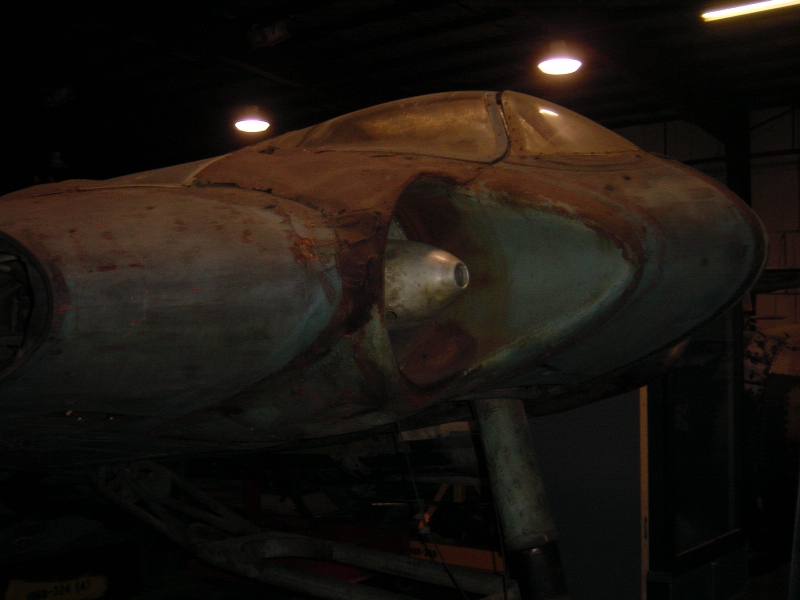
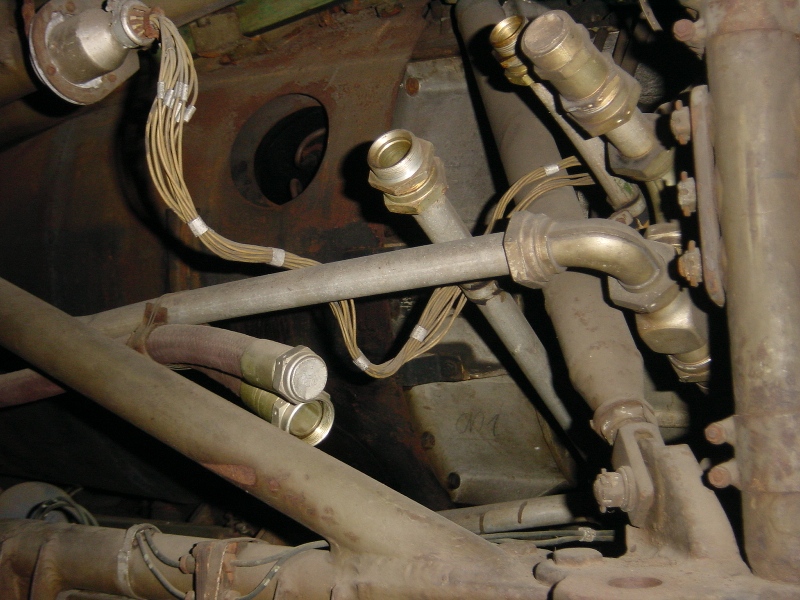
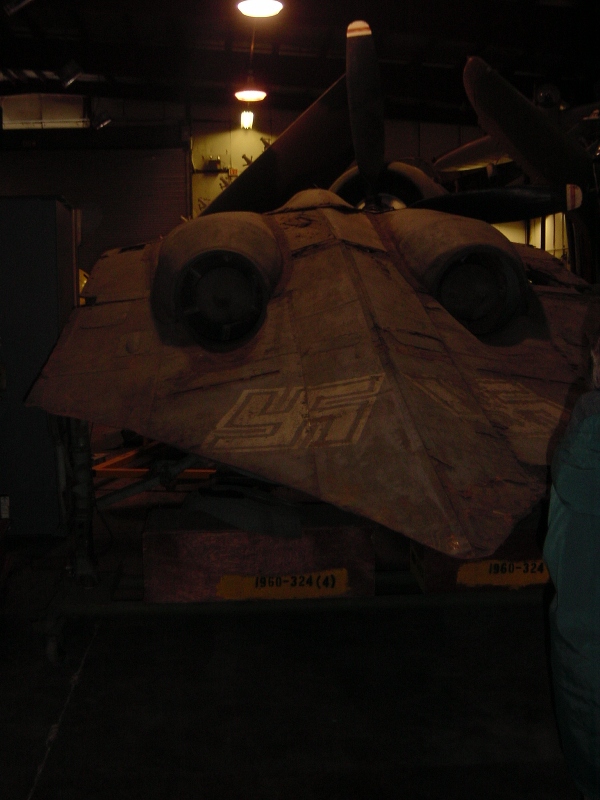
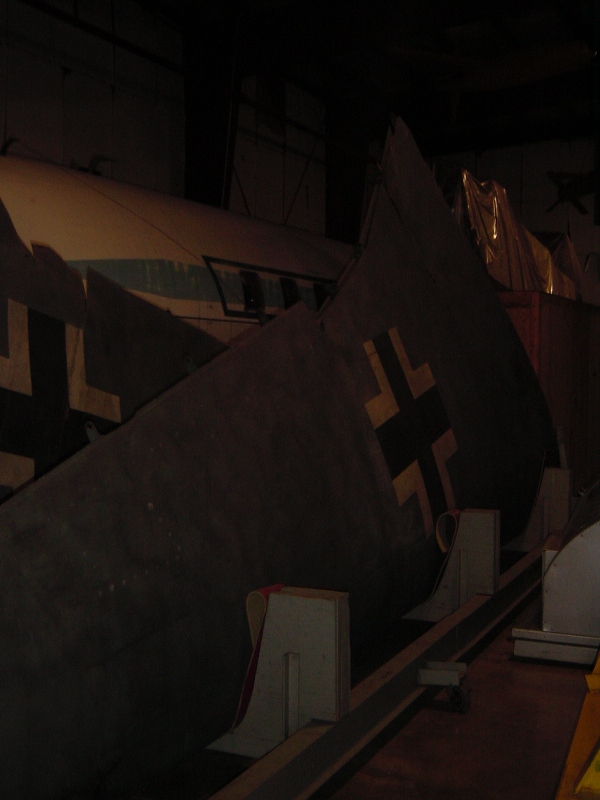
Mon Jun 29, 2009 10:00 am
Jerry O'Neal wrote:
I am not sure what the building material was for the National Geographic example, but assume that it is fiberglass rather than wood. Surely reproducing the veneered ply of the original Ho.229 would have been very difficult and expensive. Which leads again to the question of how applicable would any conclusions of the NG study be to the real 229. The whole show - which I will admit to not having seen - smacks of TV superficiality.
It is interesting, looking at Taigh's and the other photos of the wing interior as seen in the surviving fuselage, the several connections that I assume would be fuel lines. The Ho.229 was to have a wet wing, but the surviving wings at NASM, which can also be seen in some of the internet photos, have no fuel line connections of any kind. The NASM wings also have an open structure without the barrier across the wing structure that would have contained the fuel. I see no evidence from the pictures, and I unfortunately not looked into the original wings, to suggest that the wings were intended to contain fuel.
This leads me to wonder if the NASM wings are from the Horton IX glider. The glider, which was the immediate predecessor to the 229 V2 - the glider was the "V1" though it is usually not labeled as such - had some significant differences with the powered versions. The V2 fuselage was expanded a bit to include an engine of larger diameter than was originally intended, and I think the V3 was further adapted for larger engines and a somewhat different landing gear. This could make the mating of the NASM wings and fuselage a difficult (shotgun?) marriage, as the wings would belong to an airplane that was two experimental generations removed from the fusleage.
There have been a coupleof books about the Hortons, which I have not read. Do any of them go into whether the wings are indeed part of the V3 or subsequent airframes, rather than an earlier unpowered aircraft?
They really played up the "stealth" aspect with the modern TV spin.
I found it interesting that the model they built had no control surfaces, which would've probably added some higher radar returns with the gaps at the hinges. I guess it simplified construction and helped prove their "TV Themed Theory".
I am not sure what the building material was for the National Geographic example, but assume that it is fiberglass rather than wood. Surely reproducing the veneered ply of the original Ho.229 would have been very difficult and expensive. Which leads again to the question of how applicable would any conclusions of the NG study be to the real 229. The whole show - which I will admit to not having seen - smacks of TV superficiality.
It is interesting, looking at Taigh's and the other photos of the wing interior as seen in the surviving fuselage, the several connections that I assume would be fuel lines. The Ho.229 was to have a wet wing, but the surviving wings at NASM, which can also be seen in some of the internet photos, have no fuel line connections of any kind. The NASM wings also have an open structure without the barrier across the wing structure that would have contained the fuel. I see no evidence from the pictures, and I unfortunately not looked into the original wings, to suggest that the wings were intended to contain fuel.
This leads me to wonder if the NASM wings are from the Horton IX glider. The glider, which was the immediate predecessor to the 229 V2 - the glider was the "V1" though it is usually not labeled as such - had some significant differences with the powered versions. The V2 fuselage was expanded a bit to include an engine of larger diameter than was originally intended, and I think the V3 was further adapted for larger engines and a somewhat different landing gear. This could make the mating of the NASM wings and fuselage a difficult (shotgun?) marriage, as the wings would belong to an airplane that was two experimental generations removed from the fusleage.
There have been a coupleof books about the Hortons, which I have not read. Do any of them go into whether the wings are indeed part of the V3 or subsequent airframes, rather than an earlier unpowered aircraft?
Mon Jun 29, 2009 10:49 am
Taigh,
I hope you don't mind, I cleaned up your photos a bit


I hope you don't mind, I cleaned up your photos a bit
Mon Jun 29, 2009 11:24 am
I saw this show last might and thought it was well done. The implausibility of the Horten wing and it's follow on intercontinental bomber had more to do with the political situation and timing than to the engineering validity of the concept in my opinion. The Planes of Fame N9M flew many years incident free until it suffered some problems with it's one of a kind Franklin engines (POF is presently having new cylinder heads cast) and it is of the same era. Don't forget, the Horten brothers had a lot of experience with flying wing gliders (POF has a Horten IV on static display as well which flew in the US postwar for university research).
Mon Jun 29, 2009 4:43 pm
I have " NURFLUGEL " written by von Reimar Horten / Peter F. Selinger. It covers the Horten's work in first person from 1933-1960.
I wondered about the validity of the Northrop test myself. While they got the overall shape correct and is built primarily of wood, the similarities end there.
The big missing link between the original and the replica is the charcoal that was mixed in with the glue that the plywood was laid up with. Ostensibly the charcoal was added as a thickener/filler. The Northrop example was made up with standard plywood. I saw the Northrop guys use special paint to increase the reflection from nonexistant internal fuel tanks, but saw nothing that would replicate the supposed radar absorbing qualities of carbon impregnated plywood.
It is common knowledge that the YB-49, a 172 ft, all metal flying wing, had an extremely low RCS when compared with its contemporaries. A simple test was flown by the YB-49 against a coastal radar station and the radar operators were supposed to let them know when the YB-49 showed up on the scope. The YB-49 was nearly on top of the station before it was visible.
While Jack Northrop and the Horten Brothers were both pursuing all wing designs, and both had major successes, the two camps had vastly different philosophies. The Hortens were successfully designing and fliying very sophisticated high aspect ratio flying wing gliders in the 30s. These gliders were winning Europen glider competitions prewar. They were not unknown in Germany as the story suggests. Dr. Horten flatly states the Northrop approach to the flying wing "was all wrong " !
The show was an interesting piece, but I'm not sure that all of the conclusions drawn or the information submitted was correct. In all, there seemed to be more emphasis put on the dramatics and the "secret warehouse just outside of Washington ". Nothing about the location of the 229 has been secret since Paul Garber started stacking aircraft in the woods.
Some of the blueprints do have 8-229 up in the corner, all references in the book call the aircraft the HIX, V1, V2, or V3.
As to the condition of the Ho 229 when captured, Reimar Horten states in the book that the Americans captured the aircraft in excellent complete condition. Not sure what has happened in the intervening years.
I wondered about the validity of the Northrop test myself. While they got the overall shape correct and is built primarily of wood, the similarities end there.
The big missing link between the original and the replica is the charcoal that was mixed in with the glue that the plywood was laid up with. Ostensibly the charcoal was added as a thickener/filler. The Northrop example was made up with standard plywood. I saw the Northrop guys use special paint to increase the reflection from nonexistant internal fuel tanks, but saw nothing that would replicate the supposed radar absorbing qualities of carbon impregnated plywood.
It is common knowledge that the YB-49, a 172 ft, all metal flying wing, had an extremely low RCS when compared with its contemporaries. A simple test was flown by the YB-49 against a coastal radar station and the radar operators were supposed to let them know when the YB-49 showed up on the scope. The YB-49 was nearly on top of the station before it was visible.
While Jack Northrop and the Horten Brothers were both pursuing all wing designs, and both had major successes, the two camps had vastly different philosophies. The Hortens were successfully designing and fliying very sophisticated high aspect ratio flying wing gliders in the 30s. These gliders were winning Europen glider competitions prewar. They were not unknown in Germany as the story suggests. Dr. Horten flatly states the Northrop approach to the flying wing "was all wrong " !
The show was an interesting piece, but I'm not sure that all of the conclusions drawn or the information submitted was correct. In all, there seemed to be more emphasis put on the dramatics and the "secret warehouse just outside of Washington ". Nothing about the location of the 229 has been secret since Paul Garber started stacking aircraft in the woods.
Some of the blueprints do have 8-229 up in the corner, all references in the book call the aircraft the HIX, V1, V2, or V3.
As to the condition of the Ho 229 when captured, Reimar Horten states in the book that the Americans captured the aircraft in excellent complete condition. Not sure what has happened in the intervening years.
Mon Jun 29, 2009 4:56 pm
The Northrop folks had some kind of detector or measuring device they were using on the original aircraft in one of the opening scenes. Don't recall what they were measuring though. Is there any suggestion that charcoal was added to reduce radar reflection? Just because the time limited show didn't go into detail over that doesn't mean it wasn't thought of or discussed.
For the "non-Anorak" viewers, I don't mind that they played up the hidden aspects of the original plane. It certainly is not on display for walk-in customers to see like the Wright Flyer or the Spirit of St. Louis is. After all, this is TV and they need to attract casual viewers with some sort of hook.
For the "non-Anorak" viewers, I don't mind that they played up the hidden aspects of the original plane. It certainly is not on display for walk-in customers to see like the Wright Flyer or the Spirit of St. Louis is. After all, this is TV and they need to attract casual viewers with some sort of hook.
RickH wrote:The big missing link between the original and the replica is the charcoal that was mixed in with the glue that the plywood was laid up with. Ostensibly the charcoal was added as a thickener/filler. The Northrop example was made up with standard plywood. I saw the Northrop guys use special paint to increase the reflection from nonexistant internal fuel tanks, but saw nothing that would replicate the supposed radar absorbing qualities of carbon impregnated plywood.
<SNIP>
The show was an interesting piece, but I'm not sure that all of the conclusions drawn or the information submitted was correct. In all, there seemed to be more emphasis put on the dramatics and the "secret warehouse just outside of Washington ". Nothing about the location of the 229 has been secret since Paul Garber started stacking aircraft in the woods.
Mon Jun 29, 2009 5:08 pm
Might shed a bit of light on the project
Source: http://www.secretprojects.co.uk/forum/i ... 83.45.html
I’m an advanced projects engineer/manager at Northrop Grumman Aerospace Systems. I was the guy who introduced producer/director Michael Jorgensen to the Northrop Grumman team and helped convince our management to pursue and fund the Ho-229 documentary project. I’ve been directly involved with this project from start to finish and I appear in the show. I’d like to address some of the concerns you guys have raised in this forum.
A number of you have expressed concern that the radar cross section (RCS) testing of the constructed Ho-229 full-scale model is invalid for various reasons, including that fact that the model does not have an internal tubular truss structure, metallic engines, control surfaces, etc. This assertion is simply not true. I’m assuming that most of you are not low observables engineers, but please forgive me if any of the following is tutorial.
At this point in time, the aerospace industry’s low observables (LO) engineering community has considerable experience under its collective belt. Over the decades, countless structures have been illuminated across all possible radar frequency ranges. This includes full-up aircraft and models, down to individual parts, representing all forms of aircraft construction methods and material utilization developed since the Wright Brothers. LO computational techniques have been considerably refined and validated in comparison to empirical testing results.
Before we started the build, we were able to inspect the actual Ho-229 in the Smithsonian Garber facility (an awesome experience!). We were also able to do some testing of the actual aircraft’s surfaces to determine their electromagnetic properties, which you’ll see in the show. In addition, we had at our disposal a comprehensive package of wonderful Ho-229 layout drawings prepared by Arthur Bentley, and Mr. Bentley himself was a consultant to the project.
So, my point is that when we sat down to figure out how to build the Ho-229 RCS test model, we already had an excellent detailed technical understanding of this aircraft and how to effectively simulate it for the purpose of determining its electromagnetic properties.
We discussed the possibility of reconstructing the truss structure, but that would be cost prohibitive and our senior LO engineers determined that it wasn’t really necessary. To obtain the kind of first-order results we were looking for, it would be sufficient to build the model from high-grade plywood with carefully targeted applications of various conductive coatings internally and externally to simulate the interior configuration. Specialized paints and coatings are the key!! We have proven on various projects that this technique works, and that’s the way we proceeded with the Ho-229.
Another key aspect in making the construction method decisions was radar frequency. We studied the British Chain Home air defense radar systems used throughout WW II. We concluded that the use of VHF, UHF and L-band frequencies would be representative for our testing. At these relatively low long-wavelength frequencies, small details on the test model would not be visible or contribute significantly to the overall signature, including the gaps in control surfaces. Also, the coating methodology described above would be very effective at accurately simulating this aircraft at these frequencies without the need to recreate the interior features in detail. To keep things simple, we tested the aircraft in a nominal straight and level flight configuration, which would represent its best radar signature. It would have been nice to include moveable control surfaces on the model, but that was beyond the available budget.
Keep in mind that we built a test model for a one hour TV documentary, not for developing and deploying a real combat aircraft! All we needed in this case was enough engineering fidelity to achieve first order results enabling us to reach some top-level conclusions. I believe our project priorities were properly balanced with this goal in mind, and of course, within the available budget.
As you all know, the Ho-229 was not designed with stealth as a primary design goal. The aircraft has a few obvious stealth “Achilles’ Heels” such as the exposed engine faces. However, a flying wing configuration can nonetheless have inherently stealthy properties compared to conventional aircraft even if LO was not a primary design consideration. This was amply demonstrated by Northrop’s YB-49A. Regarding the Ho-229’s RCS performance, we chose to not get into radar signature reduction specifics in the documentary. Rather, we describe the Ho-229’s capabilities in terms of the resulting reduction in detection & warning time against the Chain Home radar system.
I agree that the show’s title “Hitler’s Stealth Fighter” is somewhat misleading and was certainly not my first choice. The show was produced under a different working title, but the Nat Geo Channel had the final say. Bear in mind that a show like this is created for the general public, not specifically for aviation enthusiasts. Nat Geo is in business to stay in business and I can understand why they chose this title. After more than half a century, anything “Hitler” still sells. All that said, there’s plenty of good stuff in this documentary and I think you guys will enjoy it.
As someone pointed out, the Nat Geo website for this show does state that the Ho-229 RCS model was constructed using “materials only available in the 1940’s”, and that is incorrect. They misinterpreted our statements that we used materials that are, from the RCS standpoint, representative of what was used in the 1940’s. I’ll see what I can do to get that corrected.
By the way, the full scale Ho-229 RCS model is being donated to the San Diego Air & Space Museum. We recently had a great meeting with the museum’s team and we are making plans to get the model down there and on display in time for the documentary’s debut.
All things considered, this has been a fun project. I appreciate everyone’s interest and I hope you enjoy the show!
Source: http://www.secretprojects.co.uk/forum/i ... 83.45.html
I’m an advanced projects engineer/manager at Northrop Grumman Aerospace Systems. I was the guy who introduced producer/director Michael Jorgensen to the Northrop Grumman team and helped convince our management to pursue and fund the Ho-229 documentary project. I’ve been directly involved with this project from start to finish and I appear in the show. I’d like to address some of the concerns you guys have raised in this forum.
A number of you have expressed concern that the radar cross section (RCS) testing of the constructed Ho-229 full-scale model is invalid for various reasons, including that fact that the model does not have an internal tubular truss structure, metallic engines, control surfaces, etc. This assertion is simply not true. I’m assuming that most of you are not low observables engineers, but please forgive me if any of the following is tutorial.
At this point in time, the aerospace industry’s low observables (LO) engineering community has considerable experience under its collective belt. Over the decades, countless structures have been illuminated across all possible radar frequency ranges. This includes full-up aircraft and models, down to individual parts, representing all forms of aircraft construction methods and material utilization developed since the Wright Brothers. LO computational techniques have been considerably refined and validated in comparison to empirical testing results.
Before we started the build, we were able to inspect the actual Ho-229 in the Smithsonian Garber facility (an awesome experience!). We were also able to do some testing of the actual aircraft’s surfaces to determine their electromagnetic properties, which you’ll see in the show. In addition, we had at our disposal a comprehensive package of wonderful Ho-229 layout drawings prepared by Arthur Bentley, and Mr. Bentley himself was a consultant to the project.
So, my point is that when we sat down to figure out how to build the Ho-229 RCS test model, we already had an excellent detailed technical understanding of this aircraft and how to effectively simulate it for the purpose of determining its electromagnetic properties.
We discussed the possibility of reconstructing the truss structure, but that would be cost prohibitive and our senior LO engineers determined that it wasn’t really necessary. To obtain the kind of first-order results we were looking for, it would be sufficient to build the model from high-grade plywood with carefully targeted applications of various conductive coatings internally and externally to simulate the interior configuration. Specialized paints and coatings are the key!! We have proven on various projects that this technique works, and that’s the way we proceeded with the Ho-229.
Another key aspect in making the construction method decisions was radar frequency. We studied the British Chain Home air defense radar systems used throughout WW II. We concluded that the use of VHF, UHF and L-band frequencies would be representative for our testing. At these relatively low long-wavelength frequencies, small details on the test model would not be visible or contribute significantly to the overall signature, including the gaps in control surfaces. Also, the coating methodology described above would be very effective at accurately simulating this aircraft at these frequencies without the need to recreate the interior features in detail. To keep things simple, we tested the aircraft in a nominal straight and level flight configuration, which would represent its best radar signature. It would have been nice to include moveable control surfaces on the model, but that was beyond the available budget.
Keep in mind that we built a test model for a one hour TV documentary, not for developing and deploying a real combat aircraft! All we needed in this case was enough engineering fidelity to achieve first order results enabling us to reach some top-level conclusions. I believe our project priorities were properly balanced with this goal in mind, and of course, within the available budget.
As you all know, the Ho-229 was not designed with stealth as a primary design goal. The aircraft has a few obvious stealth “Achilles’ Heels” such as the exposed engine faces. However, a flying wing configuration can nonetheless have inherently stealthy properties compared to conventional aircraft even if LO was not a primary design consideration. This was amply demonstrated by Northrop’s YB-49A. Regarding the Ho-229’s RCS performance, we chose to not get into radar signature reduction specifics in the documentary. Rather, we describe the Ho-229’s capabilities in terms of the resulting reduction in detection & warning time against the Chain Home radar system.
I agree that the show’s title “Hitler’s Stealth Fighter” is somewhat misleading and was certainly not my first choice. The show was produced under a different working title, but the Nat Geo Channel had the final say. Bear in mind that a show like this is created for the general public, not specifically for aviation enthusiasts. Nat Geo is in business to stay in business and I can understand why they chose this title. After more than half a century, anything “Hitler” still sells. All that said, there’s plenty of good stuff in this documentary and I think you guys will enjoy it.
As someone pointed out, the Nat Geo website for this show does state that the Ho-229 RCS model was constructed using “materials only available in the 1940’s”, and that is incorrect. They misinterpreted our statements that we used materials that are, from the RCS standpoint, representative of what was used in the 1940’s. I’ll see what I can do to get that corrected.
By the way, the full scale Ho-229 RCS model is being donated to the San Diego Air & Space Museum. We recently had a great meeting with the museum’s team and we are making plans to get the model down there and on display in time for the documentary’s debut.
All things considered, this has been a fun project. I appreciate everyone’s interest and I hope you enjoy the show!