This is the place where the majority of the warbird (aircraft that have survived military service) discussions will take place. Specialized forums may be added in the new future
Post a reply

Tue Dec 16, 2008 12:28 pm

Looking all the way back to 1970, there are only 2 fatal accidents in T-28s that are attributed to structural failure. One in 1978 and the other that Bill is refering to in 1995.

Tue Dec 16, 2008 1:44 pm

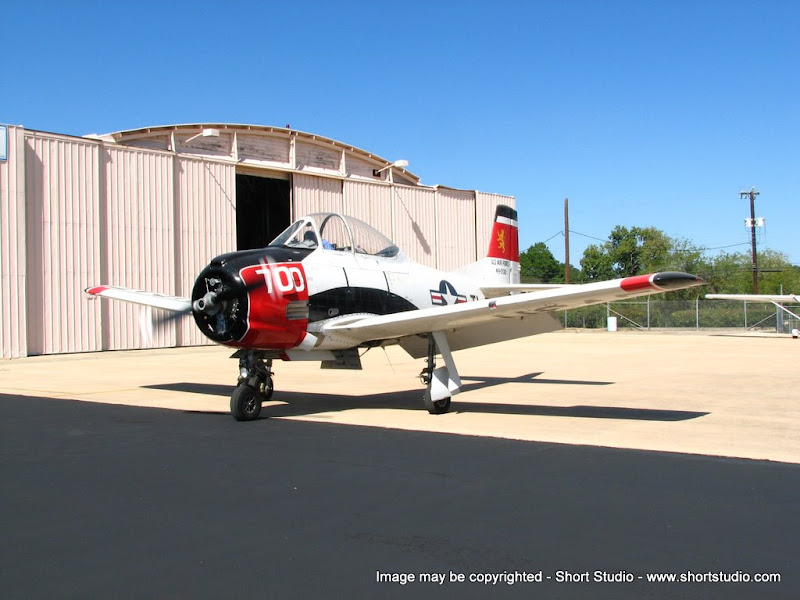
Well, I can't contribute much to the discussion, but I can tell you that we have one in the hanger where I work and the seems to like it... Wish I could see it fly more often.

Image

I can tell you Mudge that if I was offered a ride in it, I would take it.

Ryan

Tue Dec 16, 2008 7:05 pm

Ryan maybe the T-28 will be moving to 5C1 and live with the other T-28A in my hangar. Get two of them together and maybe we can have a T-34 in nine months.

Tue Dec 16, 2008 8:26 pm

NTSB Identification: FTW95FA278 .
The docket is stored in the Docket Management System (DMS). Please contact Records Management Division
Accident occurred Sunday, July 09, 1995 in RAMAH, CO
Probable Cause Approval Date: 2/14/1996
Aircraft: NORTH AMERICAN T-28B, registration: N28TP
Injuries: 2 Fatal.
WHILE MANEUVERING IN VISUAL METEOROLOGICAL CONDITIONS, THE AIRPLANE SUSTAINED AN IN-FLIGHT STRUCTURAL FAILURE THAT RESULTED IN SEPARATION OF THE LEFT AND RIGHT WINGS AND THE HORIZONTAL TAIL ASSEMBLIES. INVESTIGATION REVEALED THAT THE PRINCIPAL FAILURE MODES WERE GROSS POSITIVE (UPWARD) OVERLOADS ON BOTH THE WINGS AND THE HORIZONTAL STABILIZERS, WITH FAILURE OF THE STABILIZERS OCCURRING PRIMARILY DUE TO POSITIVE UPWARD LEADING EDGE TORSION. THE PILOT-OWNER POSSESSED A CURRENT LETTER OF AUTHORIZATION TO SERVE AS PILOT-IN-COMMAND OF THE T-28; THE SECOND PILOT'S LETTER OF AUTHORIZATION HAD EXPIRED.

The National Transportation Safety Board determines the probable cause(s) of this accident as follows:

THE AIRCREW ALLOWED THE AIRPLANE'S DESIGN STRESS LIMITS TO BE EXCEEDED.

_____________________________________________________________

NTSB Identification: MIA78FA077
14 CFR Part 91 General Aviation
Event occurred Saturday, May 06, 1978 in HUNTSVILLE, AL
Aircraft: HAMILTON T-28A, registration: N3314G

---------------------------------------------------------------------------------------------------------------------------- FILE DATE LOCATION AIRCRAFT DATA INJURIES FLIGHT PILOT DATA F S M/N PURPOSE----------------------------------------------------------------------------------------------------------------------------3-1432 78/5/6 NR.HUNTSVILLE,AL HAMILTON T-28A CR- 1 0 0 NONCOMMERCIAL PRIVATE, AGE 53, 6000 TIME - 1330 N3314G PX- 1 0 0 PLEASURE/PERSONAL TRANSP TOTAL HOURS, UNK/NR IN DAMAGE-DESTROYED OT- 0 0 0 TYPE, NOT INSTRUMENT RATED. DEPARTURE POINT INTENDED DESTINATION HUNTSVILLE,AL LOCAL TYPE OF ACCIDENT PHASE OF OPERATION AIRFRAME FAILURE: IN FLIGHT IN FLIGHT: ACROBATICS PROBABLE CAUSE(S) PILOT IN COMMAND - FAILED TO FOLLOW APPROVED PROCEDURES,DIRECTIVES,ETC. PILOT IN COMMAND - EXCEEDED DESIGNED STRESS LIMITS OF AIRCRAFT FACTOR(S) MISCELLANEOUS ACTS,CONDITIONS - SEPARATION IN FLIGHT REMARKS- LEFT WING AND LEFT HORIZONTAL STABILIZER SEPARATED.NO ACROBATIC MANEUVERS APPROVED.

???

Tue Dec 16, 2008 9:11 pm

THE AIRCREW ALLOWED THE AIRPLANE'S DESIGN STRESS LIMITS TO BE EXCEEDED.

That unfortunately sums it up.

Tue Dec 16, 2008 9:13 pm

I'm a little fuzzy on this but will try to explain as best as able. Okay , eight years ago, when a friend bought a T-28 and five of us got typed in it, we were advised on the tail. The advice being to inspect the attach points on the horizontal stabilizers. The T-28 is built strong as an ox with the exception that the tail can be "twisted" off. Note the word "torsion" in the NTSB report posted previously.
Snap rolls are not allowed. There were some instances in Vietnam where the T-28D's pulled the horizontal stabilizers off while dong very high speed , high G pull ups while rolling turns. We were told by John Kraman of Courtesy Aircraft that you can make lots of G's or turns, but no high G max roll rate type of turns. We were told that if you shake the tail with your hand and there is any flex or give at all, then it must be inspected immediately. (example; worn out Cessna C-152's and C-172's have a lot of flex in the tail.)
Another thing is the canopy should be either fully closed or fully open otherwise it is very easy to get carbon monoxide ingestion.
The T-28 is a fabulous design. A follow up by the same engineers that designed the T-6, B-25, P-51 , F-86 and then the T-28. Norht American was building some aircraft back then that went on to serve in several air forces worldwide for several decades.

???

Tue Dec 16, 2008 9:16 pm

with the exception that the tail can be "twisted" off.

Dead on! That's exactly what happen to the Whiting T-28 I mentioned earlier.
Post a reply