oscardeuce wrote:
Where's the line form?
When Douglas Bader flew Spits, how the heck did he actuate the brakes. I would think on landing, with that short coupled gear, the brakes would be needed, and DB's prosthetics would have some trouble working them. Maybe he just willed the aircraft down the runway. An amazing man and pilot.
Unfortunately, I am extremely well qualified to answer this question, as I have exactly identical amputations to Bader (right above knee, left below knee), also due to an aerobatics-related crash.
The reason he could fly is that Spits, and nearly all Britsh aircraft of that area (as well as all Eastern European aircraft, past and present), have air-operated brakes as opposed to hydraulic brakes.
The air brakes are generally operated by a lever on the stick that looks just like a bike brake lever. A valve attached to the pivot point of the rudder bar modulates the air to each brake cylinder. If the pedals are neutralized, and you squeeze the brake handle, air is distributed evenly to each wheel cylinder, and thus you will even even braking on each wheel. If you are applying full right rudder, and squeeze the brake handle, you get full right brake and no left brake.
I have flown of number of aircraft with this set-up, including Yaks, and an L-39, and it is no problem for me to safely operate the aircraft in all phases of flight. (The bigger problem is usually climbing in to the cockpit).
Some aircraft, such as a Chipmunk, and early Stinsons, have hydraulic brakes operated in a similar manner, except that instead of the brake grip on the stick, they have a handle by your side that you lift to generate the hydraulic pressure. While the air brakes on the stick set-up is super easy once you get used to it, the hydraulic style set-up is less than optimal since you have to "dedicate" a hand to the brake handle.
For the tech geeks out there, there is a recent above-knee prosthetic called the C-leg that you can program (with a laptop) to help work toe brakes. There is actually an above-knee amputee Lt. Col in the Air Force (and a good friend of mine) who flies Gulfstreams out of Andrews with this set-up. I also have this leg and occasionally fly a King Air 350 with it without too much problem. In fact, the bigger problem is getting enough leverage with my above-knee leg to push the right rudder in tight, full deflection turns on the ground...sometimes I have to use my hand to push down on the knee to get enough force.
Being a below-knee amputee isn't a big deal (all relative, of course) as you still have all the strength of your knee, and you can just "lift" your "foot" up onto the toe brakes. There have been a number of famous pilots, including the Stuka legend Hans Ulrich Rudel, who have flown with below-knee amputations.


 Login
Login Register
 FAQ
FAQ Search





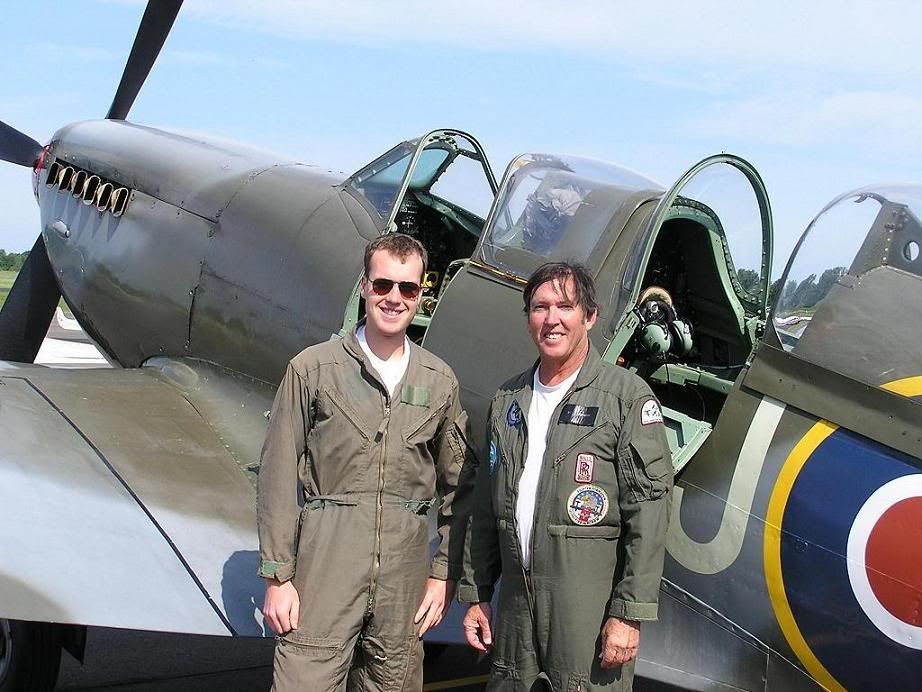
 ...you just had to rub it in didn't you!
 (sorry...it's the jealousy coming out in me